
How Lee Health Uses Mikroscan to Transform Robotic Bronchoscopy Workflows and Improve Diagnostic Confidence
For the past four years, as part of its commitment to Southwest Florida, Lee Health has been expanding its robotic bronchoscopy program. As lung cancer screenings increasingly identify suspicious pulmonary nodules, there is a growing need for precise, minimally invasive and safer diagnostic options that help physicians reach small, deep and difficult-to-access lung lesions.
One critical need during lung biopsies is to quickly perform Rapid On-Site Evaluations (ROSE). The lack of ROSE can create delays, workflow inefficiencies and the risk of patients needing repeat diagnostic procedures. This can delay patients’ care journeys and impact their survival rates and ease of services.
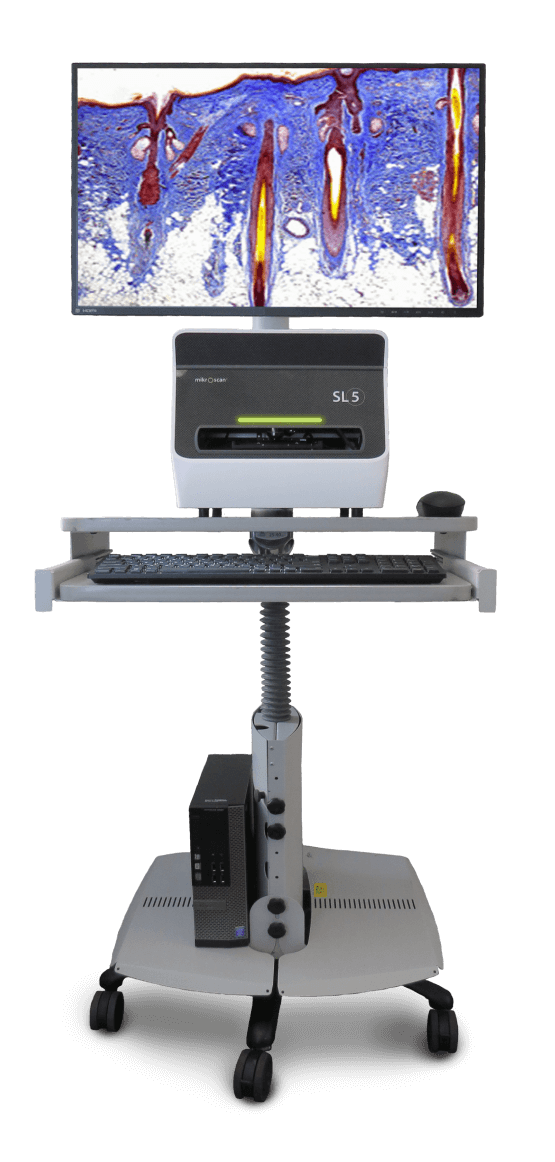
To solve this, Lee Health implemented Mikroscan as its telepathology platform to remotely control the microscope and allow real-time slide evaluation. The impact was felt instantly.
One of the most immediate changes was the ability to confirm tissue adequacy in real-time. Instead of waiting for delayed feedback or relying on verbal descriptions, pulmonologists could now see the slide themselves, recognize when a sample was “pure blood” and adjust the technique instantly.
Lee Health has been a cornerstone of health care in Southwest Florida since opening its first hospital in 1916. As a non-profit, integrated health system, Lee Health is dedicated to providing high-quality, compassionate care to the region it serves.
The system offers comprehensive services through four acute care hospitals, Golisano Children’s Hospital, three skilled nursing locations, outpatient facilities, urgent care centers, and a wide network of primary care and specialty practices. Lee Health supports every step of the health journey, from preventive care to advanced treatment for every member of the community.
Through the Lee Health Cancer Institute and the Regional Cancer Center, Lee Health provides coordinated, patient-centered cancer care close to home. The program brings together cancer screenings, diagnostic imaging, pulmonology, oncology, surgical oncology, thoracic surgery, and other specialized services to support earlier detection, timely diagnoses, and personalized treatment for every patient.
Lee Health launched its robotic-assisted bronchoscopy program in late 2022 as part of the system’s robotic surgery program. The robotic technology uses sophisticated software to analyze a patient’s prior CT scan and determine a direct route to suspicious tissue within the lungs. This technology enables physicians to make a more precise diagnosis while offering patients a minimally invasive procedure with a low complication rate.
However, a major barrier threatened the program’s effectiveness: ROSE was not consistently available. This critical assessment is performed while the patient is on the operating table and involves evaluating the tissue sample to determine whether an adequate amount of tissue has been obtained for diagnosis. Ensuring the availability of ROSE presented significant implementation and efficiency challenges.
Key challenges included:
“The purpose of ROSE is to help confirm, in real time, that we have obtained enough tissue, or the right tissue to support an accurate diagnosis,” said Dr. Juan Ibarra, System Robotic Program Manager at Lee Health. “When tissue adequacy cannot be confirmed during the procedure, there is a greater chance the patient may need to return for another biopsy. Being able to perform ROSE is a win-win for everyone.”
Lee Health needed a solution that:
After evaluating his options, Dr. Ibarra identified Mikroscan as the only platform capable of solving Lee Health’s core problem: remote, real-time microscopic evaluation with full slide control.
During his research, Dr. Ibarra found that Mikroscan was the only device that could remotely control a conventional microscope. Mikroscan and other advanced capabilities help physicians evaluate suspicious lung nodules with greater precision, support earlier and more accurate diagnoses, and streamline the ease and navigation of care. With access to advanced diagnostic technology, Lee Health can make earlier and more accurate diagnoses through minimally invasive procedures.
Mikroscan enabled Lee Health to:
Even after adding on-site cytotechnologists, Mikroscan remained essential for coverage gaps, complex cases, real-time collaboration, staff training and expansion into new service lines.
Mikroscan quickly reshaped Lee Health’s robotic bronchoscopy workflow, improving diagnostic confidence, communication and overall efficiency.
This shared visibility strengthened communication across the entire care team. Pulmonologists, cytotechnologists, pathologists and support staff all work from the same visual reference, eliminating uncertainty and accelerating learning.
“Everybody watches the screen. Everybody sees the cells. Everybody is learning,” said Dr. Ibarra.
A meaningful clinical impact followed: As the program matured, repeat diagnostic procedures declined.
While improved physician proficiency and workflow alignments contributed to this phenomenon, Mikroscan played a key role by ensuring tissue adequacy during the first procedure.
“The patient returning for a second diagnostic procedure has decreased in these past three years,” said Dr. Ibarra. “I know for sure that, as this program has matured, patients now come once and it’s unlikely they come twice for a diagnostic procedure.”
Mikroscan also influenced how biopsies were performed. Real-time feedback helped the team eliminate low-yield tools, refine needle sequencing and standardize slide preparation.
Even on days without a cytotechnologist present, staff can prepare slides, place them under the microscope, and call pathology for remote review, which is a level of flexibility that wasn’t possible before.
Lee Health’s adoption of Mikroscan demonstrates how telepathology can unlock the full potential of robotic bronchoscopy. By enabling remote ROSE, improving communication, reducing repeat procedures and strengthening clinical confidence, Mikroscan has become a critical component of Lee Health’s high-performance, data-driven diagnostic ecosystem.
Today, Mikroscan supports not only day-to-day bronchoscopy workflows in our four locations, but also the continued growth of Lee Health’s broader digital surgery ecosystem.